
Not All Pain Is the Same: How to Better Understand What You’re Feeling
One of the most important concepts for athletes and active individuals to understand is that pain is not one single experience. It exists on a spectrum, and the meaning of that sensation depends heavily on its quality, timing, and behavior under load. Learning to interpret those signals is one of the most useful skills you can build as an active person.

Expected training sensations, or what I call “Good Pain”
There are types of discomfort that are not only normal, but often necessary for adaptation:
Muscle burning during a set is a classic example. This is usually related to metabolic stress and fatigueaccumulation. In other words, it’s a sign that the muscle is working hard, not that it’s being damaged.
General fatigue toward the end of a workout is another expected response. It reflects the body’s currentcapacity being challenged. And depending on your training goal, that may be exactly what you want. It’syour body saying, “Yep, this is hard,” which is kind of the point.
Lastly, delayed onset muscle soreness (DOMS), which typically shows up 24–72 hours after a new or intensesession, is also common. It is generally self-limiting and usually improves with continued movement.
These sensations are often associated with training stimulus and adaptation.
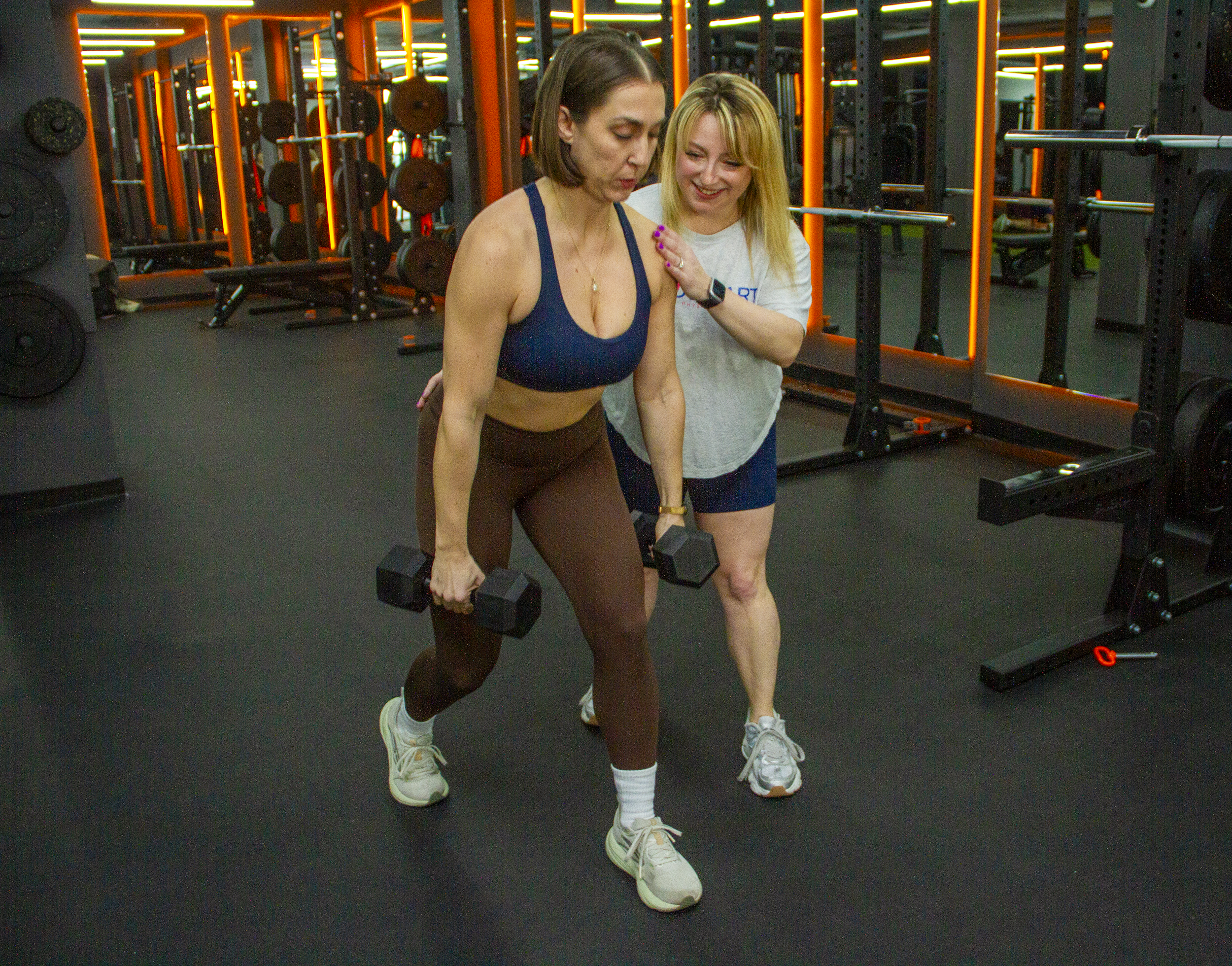
Concerning pain signals, or what I call “Bad Pain”
Other types of pain behave very differently:
Sharp, stabbing, or pinching sensations tend to be more localized and specific. These are less likely toreflect general training stress and more likely to indicate tissue irritation or overload. This is your stop sign.Your body is telling you something isn’t quite right and should be looked at more closely.
Pain that increases as you continue an activity is another important red flag. A lot of people assume theycan just push through it and it will magically disappear. Training-related fatigue usually plateaus, whereasinjury-related pain often escalates. Again, this is your body letting you know something needs attention.
Pain that changes how you move, such as limping, shifting load away from one side, or avoiding certainpositions, is especially important. That usually means the nervous system is stepping in with a protectivestrategy.
Pain that lingers long after exercise, or consistently shows up in the same location with load, is also worthpaying attention to.
Why this matters
The key point is not whether something “hurts,” but how it behaves. Two people can report “pain” duringexercise, but one may be experiencing normal training fatigue while the other is showing signs of overloador injury. Without context, those two experiences get treated the same, and that usually leads to poordecisions in both training and rehab.
Understanding the type of pain you’re dealing with is the first step in making better training choices.